Clavero Amazon Cruise
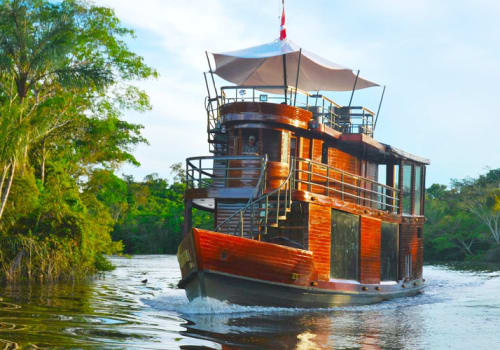
The Amazon's Oldest Navigating Vessel
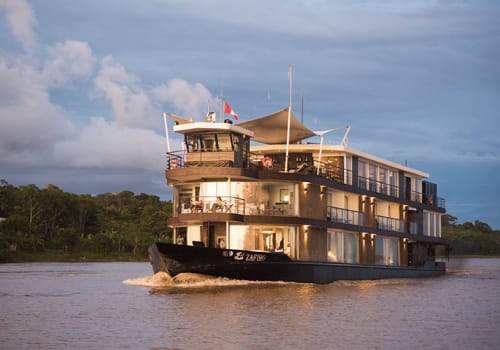
A great-value, yet in-depth, look at the biology of Amazonia aboard the Amazon's oldest riverboat: Photos
A unique Amazon River cruise experience that combines travel on a historic boat restored to its Victorian splendour, wildlife watching in pristine forests and rivers, and encounters with indigenous Amazon villages where locals are helping to conserve the rainforests.
As you cruise through the glassy calm of an Amazon tributary, watch the black majestic water, gaze at butterflies fluttering in the hot midday sun, and observe monkeys leap from tree tops in the comfort of a historic Amazon Riverboat.
At night, spot caimans splashing in the moonlight; in the morning, watch flocks of macaws flying in the twilight mist; and at midday, witness fish jumping in oxbow lakes.
Take your tea with cake as the forests slip past, or sip your gin and tonic as the tropical sun slides into a fiery sunset.
With space for just 12 passengers, the atmosphere on board is intimate and informative, and the service of the crew is friendly and personal. And an eight-day cruise offers the chance to go deep into the Pacaya Samiria National Reserve, in the company of true experts.
8-Day Historic Amazon Riverboat Itinerary
The Clavero is often used for biological and anthropological research, and so this week-long cruise into the Pacaya-Samiria National Reserve is educationally-focused, with well-respected, qualified biologists as your guides.
Please note that the below itinerary is intended as a guideline only. The boat crew reserves the right to amend the itinerary in accordance with climactic conditions, river water levels and the movement of wildlife.
Day 1: Sat: Iquitos: Casa Morey
Upon arrival at the airport, you will be met and escorted to your comfortable hotel. This itinerary includes one night’s accommodation in the Casa Morey, a historical monument in the heart of the Peruvian Amazon. This refurbished, boutique hotel is situated in a privileged location near the riverfront of Iquitos - walking distance from number of restaurants and bars.
Enjoy the nightlife of Iquitos, or catch up on your rest, before departing tomorrow for your Amazon Cruise.
Day 2: Sun: Iquitos - Nauta - Nauta Cano
(All meals)
After breakfast, we depart for a roughly two-hour drive to Nauta where the Clavero awaits. During our first day, we will receive a safety briefing and general introduction to the area.
After lunch, we will visit Nauta Cano, a tributary of the Marañon River, where we will have our first oportunities to spot wildlife.
In the evening, we can enjoy a sunset cocktail followed by a viewing of Fizcarraldo by Werner Herzog.
Day 3: Mon: Marañon River - Samiria River
(All meals)
This morning, we will enjoy a presentation by our naturalist guide followed by afternoon bird watching and wildlife observations.
In the afternoon, we will arrive at the mouth of the Samiria River, where we will enter Pacaya Samiria National Reserve.
This evening, we will have the possibility to enjoy a night excursion in search of noctural wildlife such as caiman, amphibians, or birds of prey
Day 4: Tues: Samiria River - Pacaya Samiria National Reserve
(All meals)
Today we will have a flexible schedule in which passengers can either enjoy bird-watching from their skiffs, trekking in the forest, or a fishing excursion aboard an auxiliary boat.
You will be overwhelmed by the sheer size and magnitude of the national reserve as you enjoy the raw beauty of this untouched wildnerness.
Day 5: Weds: Pacaya Samiria National Reserve
(All meals)
Observing Pink River Dophins in their natural habitat is one of the highlights of any Amazon cruise. Your days spent in the Pacaya Samiria Reserve will afford you plenty of opportunities to view these majestic creatures.
Each day aboard the Ayapua is flexible, and the schedule can be adjusted to the tastes of passengers.
Day 6: Thurs: Pacaya Samiria National Reserve
(All meals)
Depending on the water levels, we will enjoy a hike in the forest (during dry season), or enjoy navigation down tiny creeks and streams in search of wildlife.
In Pacaya Samiria, water levels can fluctuate drastically between seasons, leaving vast swaths of the forest inundated in high-water periods; or large beaches exposed in low-water season.
Day 7: Fri: Pacaya Samiria - Marañon River - Amazon River Junction
(All meals)
Today is our last day in Pacaya Samiria. Early in the morning we begin our trip back to civilization having fully immersed ourselves in the wilds of the Amazon. En route, we will visit a local Cocama indigenous village. To understand the complex network of threats facing the Amazon, it is utterly critical to see first-hand how its native inhabitants live and interact with their environment. This will also be a good opportunity to support the local economy by purchasing handicrafts produced by the villagers.
During the evening we will learn about common myths and legends of the Amazon.
Day 8: Sat: Nauta - Iquitos
(Breakfast)
Morning arrival in Nauta followed by your transfer to Iquitos airport for your onward flight.
Or you may like to spend more time in Iquitos or at one of the many superb rainforest lodges that are within a boat ride of the city.
Peru Amazon Tour Prices: Clavero
8 Day Amazon River Cruise:
~ Standard Cabin: $2,449 *
Price Policy:
- All prices listed are PER PERSON in DOUBLE OCCUPANCY Cabins
- Published Prices for 2013 Amazon Cruises only
- Single Supplement $420
Included:
- All meals while aboard your Amazon Cruise
- One night in Casa Morey Boutique Hotel, Iquitos with breakfast
- Expert, bilingual guides and excursions
- Transfer to / from Iquitos airport
- Pacaya Samiria National Reserve Entrance Ticket
Not Included:
- International or Domestic Airfares
- Airport Taxes
- Cost of medical emergencies including evacuation
- Gratuities
- Souvenirs or additional services
- Travel Insurance
- Cost of relevant visas
- Anything else not listed as included
* Note: Departures with 4-8 passengers only will cruise aboard the Clavero.
Departures with 9 or more passengers will be aboard Ayapua.
History
The Clavero is a historic Peruvian Amazon riverboat. She was built in Paris, France in 1878 and purchased by the Peruvian Navy in 1892 to be part of their Amazonian fleet. The Clavero was involved in many important exercises during this period:
- She was used to expel an invading Ecuadorian army in 1903
- She was used by the joint Brazilian-Peruvian discovery expedition to the Rio Purus in 1905.
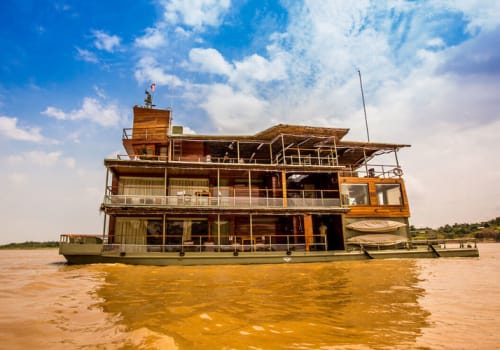
The Clavero had fallen into disrepair, but underwent restoration work from 2007 to 2009, and retains many of her original features. Since then, she has been used for study expeditions to the Yavari and Samiria rivers.
General
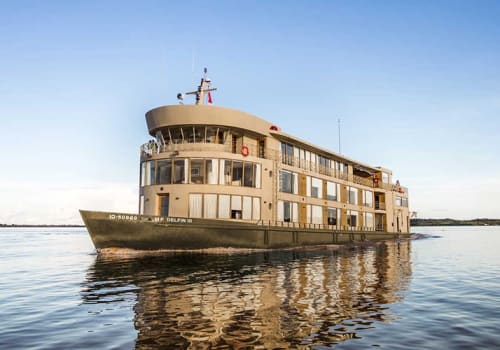
The Clavero is a 28m / 92ft long and 5m / 16ft wide boat of steel construction. There are 6 air-conditioned Cabins, with private facilities.
There is also a large Lounge area that serves as a dining room, bar and library, and where project work and lectures take place.
The is an Observation Deck at the top of the boat.
Deck Plans


Cabin 1 - Single / bunk
Cabin 2 - Single / bunk
Cabin 3 - Single / bunk
Cabin 4 - Twin (2 single beds)
Cabin 5 - Twin (2 single beds)
Cabin 6 - Twin (2 single beds)
Cabins contain wardrobe, chair and reading lights.
Max passengers, 9 no bunks, 12 with bunks.

Restoration & Conservation
The Clavero is part of a holistic restoration project, intended to preserve both Amazonian history and Amazon Rainforest integrity.
Steam boats were at the heart of the Rubber Boom of the late 19th and early 20th Century, playing a vital role in transporting the valuable collected balls of rubber from remote parts of the Amazon rainforest, along the tributaries of the Amazon River, to thriving cities, such as Iquitos and Manaus in Brazil; and ultimately to feed the demands of emerging manufacturing processes, such as the automotive industry.
Great fortunes were made from the trade, leading to lavish lifestyles and ambitious projects, such as the construction of an Opera House in Manaus. But there was also a dark side, as the indigenous populations were ruthlessly exploited in the pursuit of this precious raw material. The atmosphere of the era is most notably captured in Werner Herzog's classic film Fitzcarraldo.
Despite this unsavoury side, it is important that this defining era in Amazonian history is not lost. And so Rainforest Cruises is delighted to support this project to restore these former steam boats in an authentic manner. Three have been restored already: the Ayapua, the Clavero and the 18-cabin Rio Amazonas, which was relaunched in March 2012 having been refurbished in the port of Iquitos. Even the launches used in conjunction with these riverboats, are restored classics.
Moreover, once restored, the expeditions of these Historic Riverboats involve their members in important conservation work. Populations of Amazon fauna, such as monkeys, manatees, tapirs and large felines, are monitored. And community-based projects in the local indigenous communities are undertaken.
Historic Amazon Cruiseship Clavero: 8-Day Itinerary Charter Dates: 2012
The Clavero is very much in demand as a support vessel for academic research and documentary makers, but there are opportunities in 2012 and 2013 when it is available for charter. The minimum number of people needed for a charter is only four, so it is ideal for a family, or group of friends, who wish to have a spectacular experience together.
2013 Dates:
~ Sat 25th May - Sat, 1st June: CONFIRMED: SPACES AVAILABLE
~ Sat, 1st - Sat, 8th June
~ Sat, 29th June - Sat, 6th July: SOLD OUT
~ Sat, 6th - Sat, 13th July
~ Sat, 20th - Sat, 27th July
~ Sat, 3rd - Sat, 11th August
~ Sat, 10th - Sat, 17th August
~ Sat, 17th - Sat, 24th August
~ Sat, 31st August - Sat, 7th September
~ Sat, 7th - Sat, 14th September
~ Sat, 14th - Sat, 21st September
~ Sat, 5th - Sat, 12th October
~ Sat, 12th - Sat, 19th October
~ Sat, 2nd - Sat, 9th November
~ Sat 9th - Sat, 16th November
~ Sat 16th - Sat, 23rd November
~ Sat, 14th - Sat, 21st December
~ Sat, 21st - Sat, 28th December
~ Sat, 28th December - Sat, 4th January, 2014
If you have a larger group, then ask us about chartering the Ayapua or Rio Amazonas.