
Historical Amazon Cruises

These Historical Amazon Riverboats are part of a fascinating and worthwhile project to promote and explore the biology and history of the Amazon River.
Historical Defined: Restoration & Conservation
The Historical Amazon riverboats are part of a holistic restoration project, intended to preserve both Amazonian history and Amazon Rainforest integrity.
Steam boats were at the heart of the Rubber Boom of the late 19th and early 20th Century, playing a vital role in transporting the valuable collected balls of rubber from remote parts of the Amazon rainforest, along the tributaries of the Amazon River, to thriving cities, such as Iquitos and Manaus in Brazil; and ultimately to feed the demands of emerging manufacturing processes, such as in the automotive industry.
Great fortunes were made from the trade, leading to lavish lifestyles and ambitious projects, such as the construction of an Opera House in Manaus. But there was also a dark side, as the indigenous populations were ruthlessly exploited in the pursuit of this precious raw material. The atmosphere of the era is most notably captured in Werner Herzog's classic film Fitzcarraldo.
Despite this unsavoury side, it is important that this defining era in Amazonian history is not lost. And so Rainforest Cruises is delighted to support this project to restore these former steam boats in an authentic manner. Two have been restored already: the Ayapua and the Clavero. Another, the Rio Amazonas, is currently being restored in the port of Iquitos. Even the launches used in conjunction with these riverboats, are restored classics.
While the decor and ambience may be retro, the amenities and service are right up to date, with air-conditioned cabins, all with private bathrooms, as standard. Public areas include a bar, library and dining hall, where excellent meals are served daily.
The guides are specialists in biology, and so provide a wonderful insight into the flora and fauna of the Pacaya-Samiria National Reserve, which is the major destination of the Historic Riverboat itineraries.
Moreover, the expeditions involve their members in important conservation work. Populations of Amazon fauna, such as monkeys, manatees, tapirs and large felines, are monitored. And community-based projects in the local indigenous communities are undertaken.
So, for a truly symbiotic Amazon cruise experience, whereby you are supporting a fantastically imaginative project, while having a comfortable, informative and unforgettable vacation, a Historical Amazon Riverboat is second to none.
A unique Amazon River cruise experience that combines travel on historic boats restored to their Victorian splendour, wildlife watching in pristine forests and rivers, and encounters with indigenous Amazon villages where locals are helping to conserve the rainforests.
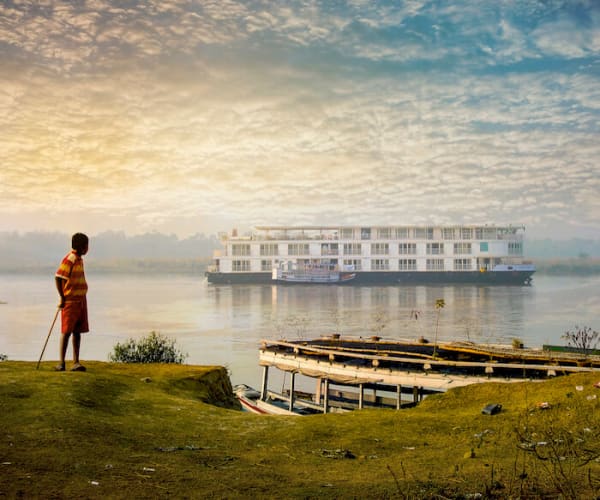
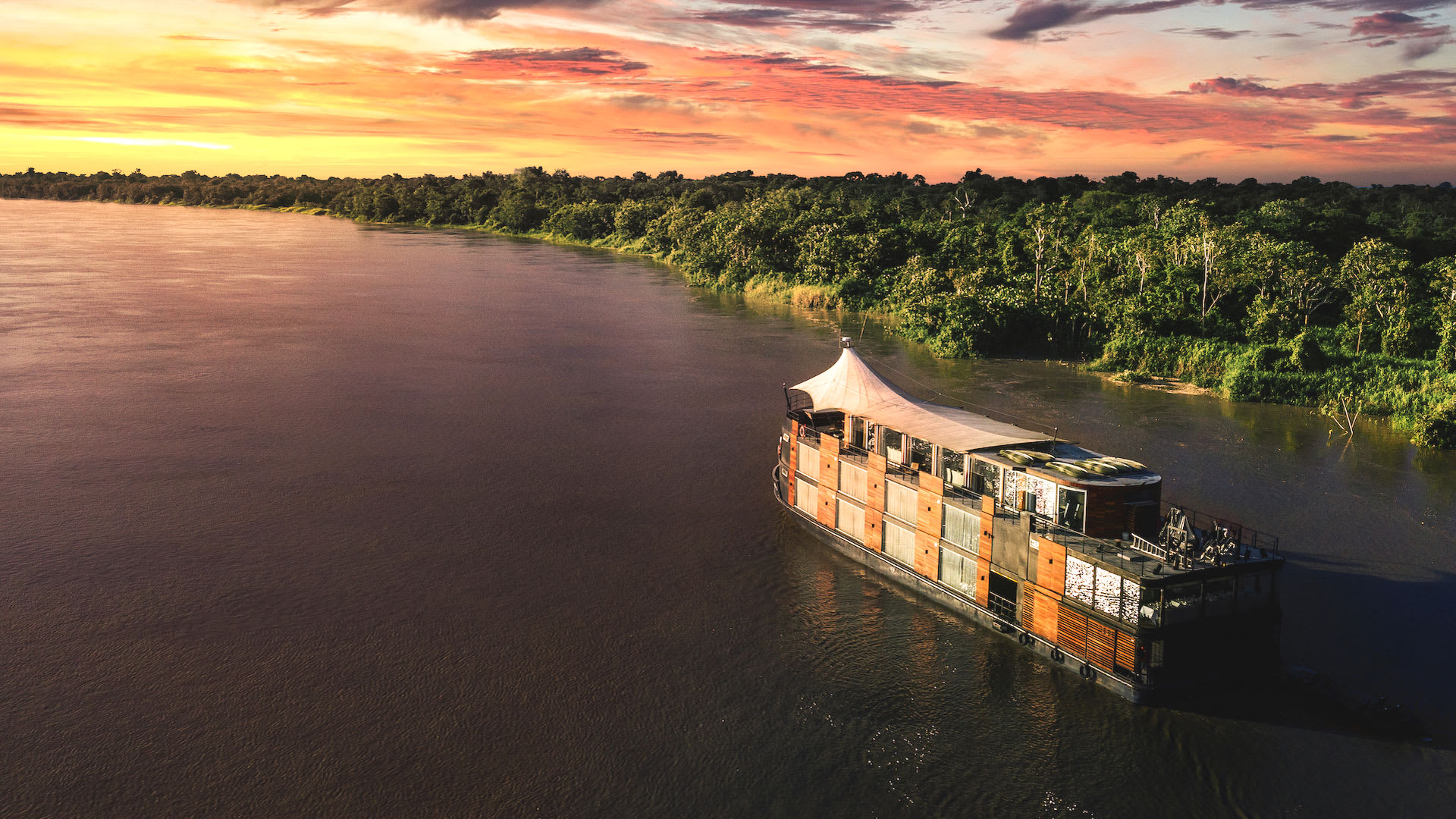
The Ayapua is the largest Historic Riverboat operating in Peru's Amazon, measuring 33m / 108ft in length and 6m / 20ft in width. She can carry 19 passengers in nine spacious twin cabins and one single, all with private bathrooms and air-conditioning.
The Ayapua's public spaces include a library, bar, dining hall and an observation deck, ideal for watching the Amazon jungle slip by. So a jungle cruise on the Ayapua is atmospheric of a former era, while at the same time being supremely comfortable and informative.
A unique Amazon River cruise experience that combines travel on a historic boat restored to its Victorian splendor, wildlife watching in pristine forests and rivers, and encounters with indigenous Amazon villages where locals are helping to conserve the rainforests.
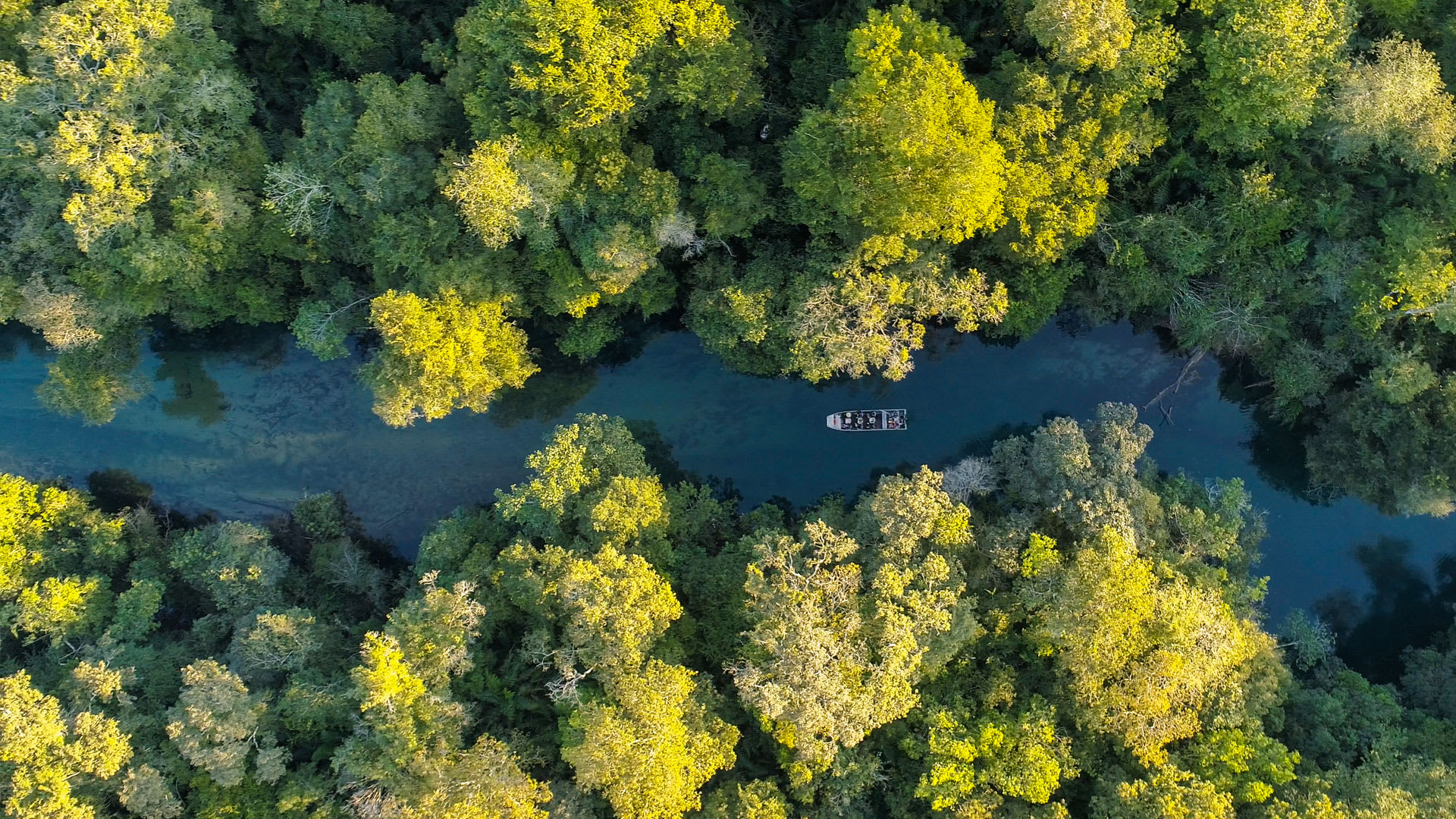
As you cruise through the glassy calm of an Amazon tributary watch the black majestic water, gaze at butterflies fluttering in the hot midday sun, and observe monkeys leap from tree tops in the comfort of a historic Amazon Riverboat.
At night, spy caimans splashing in the moonlight; in the morning, awe at flocks of macaws flying in the twilight mist; and at midday, watch fish jumping in oxbow lakes.
Take your tea with cake as the forests slip past, or sip your gin and tonic as the tropical sun slides into a fiery sunset.
Rio Amazonas
The Rio Amazonas has recently entered active service - again - having been restored in the port area of Iquitos.
Like the other Historic Riverboats, she has had a colourful history. Built in 1899, in Clyde in Scotland, she started life as a rubber transport steamship operating out of Belem at the mouth of the Amazon River, in Brazil.
When purchased in 1936 by the rubber baron Adolfo Morey Arias, her name was changed to 'Arias', and operated as a cargo and passenger ship along the 2,000 mile route Iquitos - Belem. She was one of the largest riverboats in the Peruvian Amazon with three decks and a size of 44m / 144ft in length and 9m / 30ft in width.
In the 1980s, the Arias had its name changed to the 'Rio Amazonas' and was converted into a tourist boat, principally plying the route between Iquitos and Leticia, on the border of Colombia, and back. It was in this guise, in 2002, that Rainforest Cruises co-owner, Miles, first experienced an Amazon river cruise, while working as a tour leader in South America. Three times, he took a group of international travelers on the Rio Amazonas from Iquitos to Leticia, a spectacular journey of four days, that follows part of Che Guevara's Motorcycle Diaries route. Little did Miles think at the time how large an impact the experience would have on him!
Now refurbished, the Rio Amazonas has 18 cabins, along with two dining halls, a bar and a library, while maintaining her original steamship ambience. Her facilities are ideal for student groups, keen to explore the Pacaya-Samiria National Reserve in depth.
The Launches
Steam launches of the rubber boom period transported black latex from streams deep within the Amazon region to larger boats, such as the Ayapua. The steel launches were built in Europe at the end of the 19th and beginning of the 20th Century, and brought to the Amazon on larger ocean-going vessels.
The Fitzcarraldo was built c. 1890 and is believed to be of German construction. She is named after the famous geographer and rubber baron, Carlos Fitzcarrald, who discovered the isthmus between the Madre de Dios and Ucayali valleys.
Fitzcarrald hauled a boat similar to this one over the isthmus to collect rubber from the rich forests of southern Peru and northern Bolivia with his friend and partner Vaca Diaz. Unfortunately, when they were bringing their second boat up the Ucayali, it floundered on a stretch of rapids, Vaca Diaz fell overboard, Fitzcarraldo jumped in to save him, and they both perished.
The Cahuapanas was built around 1900, and is believed to be of British construction. 'Cahuapanas' is the original name of the Clavero. Her long design allows her to carry people both under the canopy and in the open air of her bow.
The Benjamin is a lifeboat from a rubber boom ship of the same name built around 1905. She is used for wildlife surveys during expeditions and provides a stable, open air ambiance for sighting animals along the river.