
Millions of elephants once roamed wild in Southeast Asia munching on bamboo, bark, fruits and leaves. As beasts of burden, they transported tree trunks and goods and, as warriors, they charged out in battle led by warmongering kings. Asian elephants symbolised royalty, too. A white elephant, if ever one was found, conveyed immense good luck and became the immediate property of the reigning king.
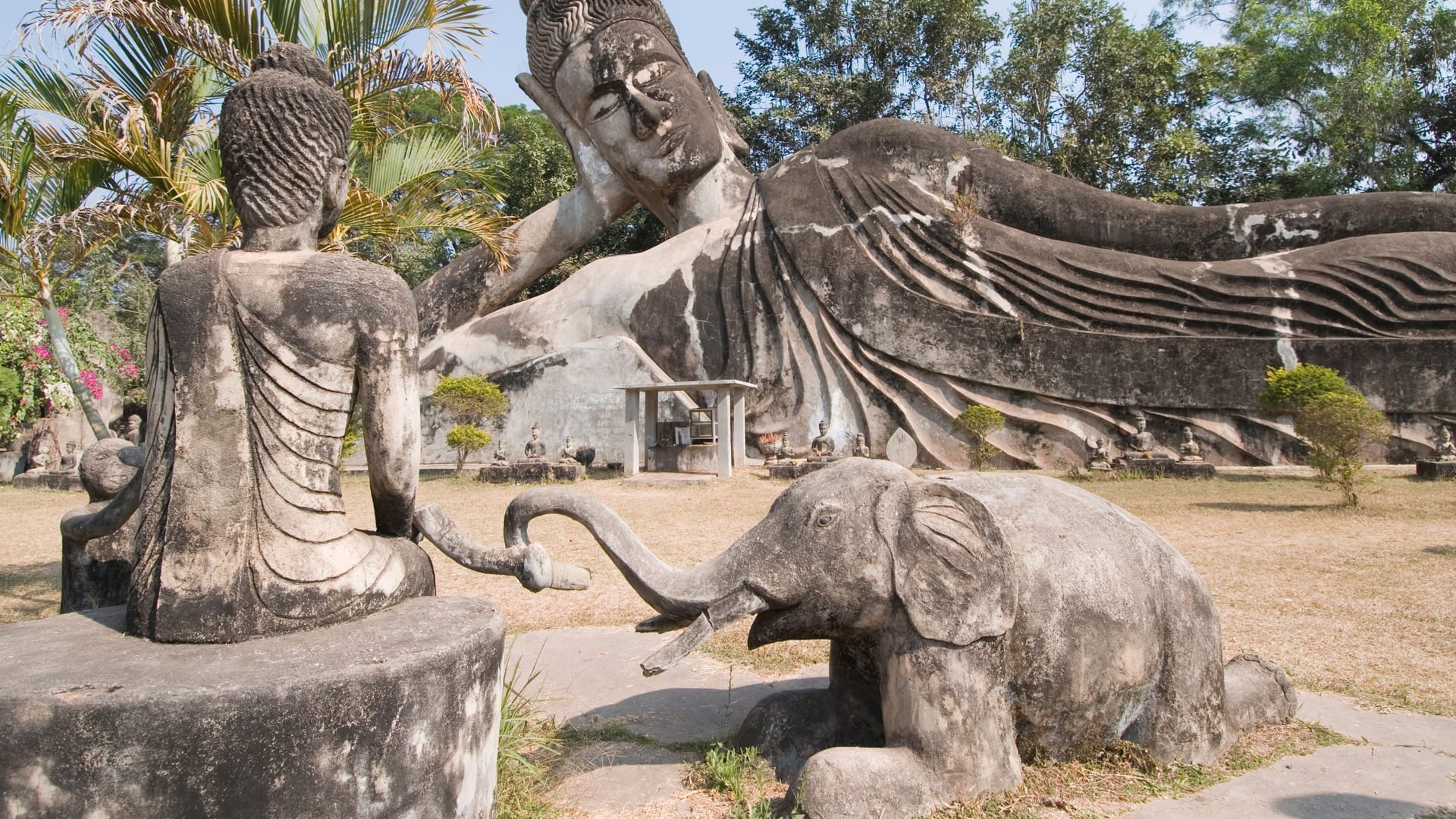
Elephants hold deep spiritual and royal significance across Southeast Asia, often depicted as symbols of peace and reverence in historical Buddhist art.
In Laos, Elephas maximus symbolises sanctity and prosperity and is the emblem of royalty. When the kingdom of Lane Xang Hom Khao, Land of a Million Elephants and White Parasol, split in the early 18th century, a three-headed elephant came to represent the new three royal kingdoms of Laos: Vientiane, Champassak and Luang Prabang.
In Hindu mythology, a three-headed elephant symbolised royal power. For the ancient Khmer who ruled Cambodia, the three-headed animal represented Airavata, the white mount of the rain god, Indra.
At Angkor Thom, the city of the ancient Khmer rulers not far from Angkor Wat in Cambodia, you’ll come across three-headed stone elephants and will see carvings of hunting pachyderms along the Terrace of the Elephants when you tour the site.
For those following the Buddhist faith, the elephant is a symbol of strength and steadfastness. The creature is fundamental to the foundational story of the religion as the Buddha’s mother conceived the Buddha after dreaming of a white elephant with six tusks carrying a white lotus who impregnated her with his tusk through her right side.

Asian elephants face ongoing threats across Southeast Asia. Ethical sanctuaries offer a safe space, helping protect these endangered giants for generations to come.
Today, there are just a few hundred wild Asian elephants remaining in Cambodia and Laos with an additional few said to live in Yok Don National Park in Vietnam on the border with Cambodia. In Laos, it’s said 500 endangered Asian elephants remain in captivity; in Cambodia it’s 75.
In recent years, since logging was outlawed in Laos 10 years ago, and the tide has turned on the opinion of elephant riding across the world, working elephants and tourist riding camp animals have been rescued, and brought to calmer environments in which to ramble and live quieter lives.

Choosing an ethical sanctuary ensures your travel directly supports genuine elephant welfare and protection in Cambodia and Laos.
A couple of these ethical elephant sanctuaries are found in Laos and in Cambodia. Some are working to boost wild populations, too. Several cruise lines feature visits, such as Heritage Line and Pandaw in Laos. Alternatively, you can book pre- and post-cruise excursions to the sanctuaries that maintain high standards. This translates as minimal contact with the animals but trekking alongside elephants and their mahouts, the elephants’ lifelong keepers, through dry forests is a highlight of any trip. Catching sight of a baby bumbling along or playing in water, even better.
The following sanctuaries all pass the ethical test and do excellent conservation work on protecting this endangered animal. All visits include an educational element via talks and displays.
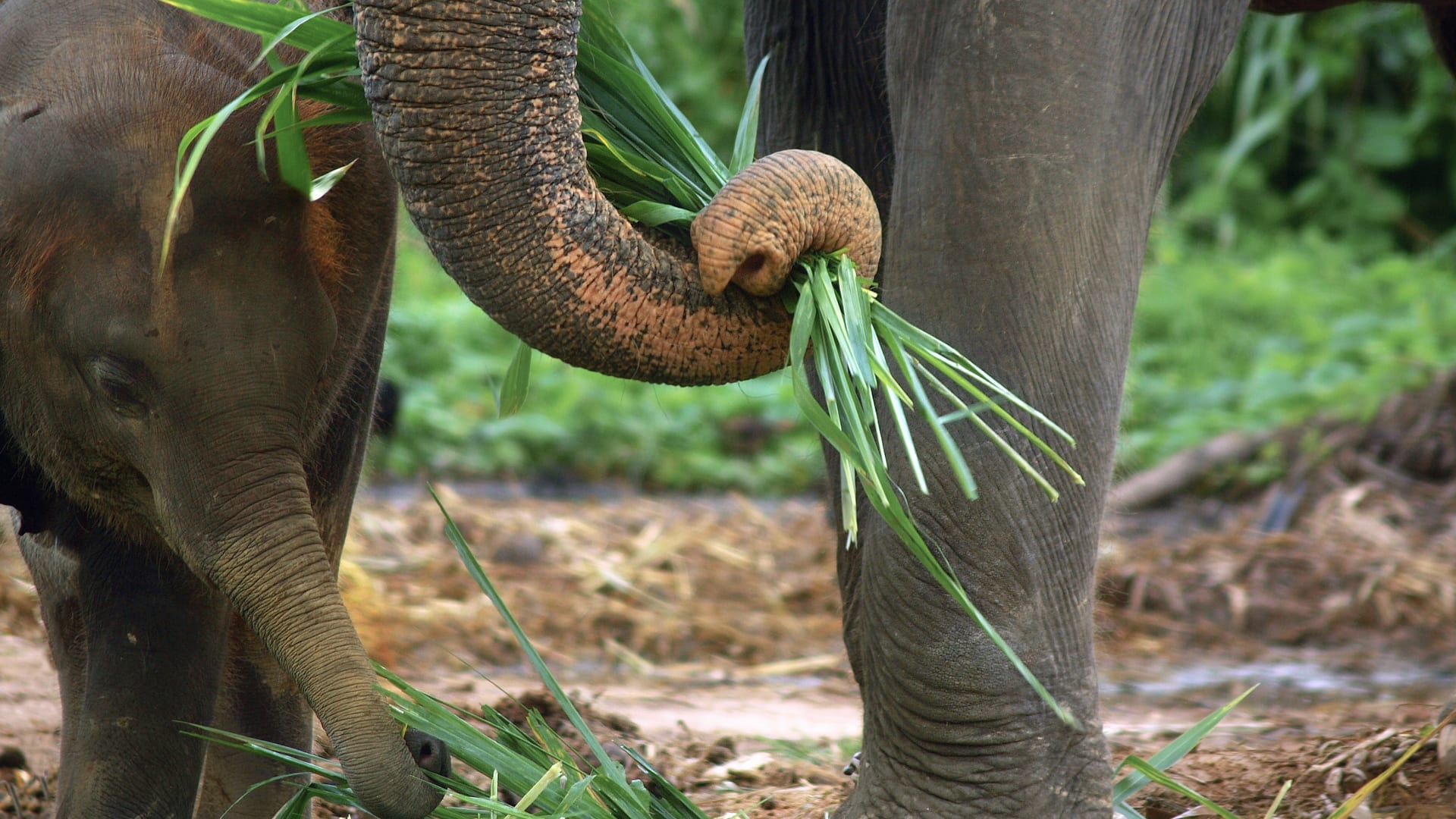
Sanctuaries like the Mekong Elephant Park in Pakbeng allow rescued elephants and their young to forage naturally in a peaceful environment.
At Pakbeng on the banks of the Upper Mekong in Laos is the French NGO-supported Mekong Elephant Park. This is a very accessible small sanctuary on the riverbank where you’ll walk close to the female elephants alongside their mahouts, watch mahouts taking care of the elephants at the medical post, and delight in observing the elephants bathing in a specially created pool that needed repair after Typhoon Yagi destroyed it in 2024. Supporting this Pakbeng park allows staff to fund patrols of the area (to prevent poaching), house the six elephants comfortably, and fence areas for safety.

At MandaLao in Luang Prabang, rescued elephants roam freely through lush riverbanks, offering visitors a non-intrusive way to observe them in their natural habitat.
A 30-minute transfer from Luang Prabang brings you to Mandalao set on the beautiful banks of the Nam Khan River. Co-founded by American Michael Vogler, visitors cross the river by boat, help feed the elephants and walk at a respectful distance with some of the 12 elephants it cares for through the sanctuary’s 500 acres of bamboo forest. Mandalao works with Thai elephant expert Prasop Tipprasert, founder of the pioneering Thai Elephant Conservation Center.
The gold standard is the Elephant Conservation Center set on the banks of the Nam Tien Lake, a 3-hour-drive from Luang Prabang by direct shuttle. Working for the protection of the Asian elephant since 2010, the center offers immersive programs alongside one-night trips. You’ll watch the elephants bathe in the lake, prepare enrichment food which helps elephants reduce stress and observe elephants at the health clinic, and walk with some of the 27 elephants under the ECC care. Stays are in bungalows overlooking the beautiful lake.
In Cambodia, the Kulen Elephant Forest is close to Angkor, a one-hour drive from Siem Reap. Within the Bos Thom Community Forest in the foothills of Kulen Mountain, some 10 elephants, formerly ridden at the temples of Angkor, roam freely in 1,100 acres. You’ll walk with the elephants and help prepare enrichment, healthy snacks.

In the forests of Mondulkiri, the Elephant Valley Project gives rescued elephants the freedom to socialize naturally and thrive in their native habitat.
In Mondulkiri, 362 kilometers northeast of Cambodia’s capital Phnom Penh, is the Elephant Valley Project caring for seven elephants in almost 4,000 acres of forest and supported by a local NGO since its foundation in 2006. You’ll learn about the indigenous Bunong people who live in the region and care for the jumbos as well as walk with the elephants as they graze the forest floor and eat tree branches.

Dedicated keepers at The Mondulkiri Project care for rescued elephants, offering sanctuary in Cambodia’s lush jungle while supporting local forest conservation.
This region hosts the Mondulkiri Project, too, where four elephants are cared for in a protected forest valley by Bunong guides. Tours include walking with the elephants to a jungle waterfall. Supporting this Cambodian NGO-founded project also helps rangers remove snares from young wild elephants in the neighbouring Keo Seima Wildlife Sanctuary.
Rainforest Cruises advisors are on hand to help you choose the best ethical elephant sanctuary visit for your trip.
While Rainforest Cruises aim to provide accurate and up-to-date information, we make no representations as to the accuracy or completeness of any information herein or found by following any link on this site. Rainforest Cruises cannot and will not accept responsibility for any omissions or inaccuracies, or for any consequences arising therefrom, including any losses, injuries, or damages resulting from the display or use of this information.