
Choosing between an Indonesia cruise depends on your priorities: Komodo offers easy access to legendary dragons and diverse marine life from April to September provides world-class biodiversity and remote landscapes from October to April. The Spice Islands are best in September and October for travelers seeking colonial history and off-the-beaten-path exploration.
If you’re seeking adventure, marine life and wildlife, culture, history, and remote natural beauty, adventure cruises through Eastern Indonesia on small wooden ships, such as Rascal, Aliikai, and Mutiara Laut, offer experiences to rival anywhere else in the world. Among the many options available, from Wakatobi to Manado, Flores to Alor (please contact our specialists if you want more information on cruises to these less-visited destinations), there are three regions that consistently stand out: Komodo National Park, Raja Ampat, and The Spice Islands, with each destination presenting you with different reasons to visit.

Whether you’re dreaming of the rugged hills of Komodo, the hidden reefs of Raja Ampat, or the historic spice routes, choosing the right Indonesian cruise is the first step toward an unforgettable marine adventure.
Seasonality across these regions is governed by Indonesia’s monsoon system, driving shifting wind patterns between Asia and Australia to shape conditions for both marine and land activities. Raja Ampat straddles the Equator, which means the seas are calmer and rainfall is lower during the northwest monsoon, making October to April the best time for wildlife spotting, birdwatching, diving and snorkeling. In Komodo, the southeast monsoon, from April through September, delivers cooler, drier conditions for diving, snorkeling, hiking, and wildlife spotting, with strong currents boosting marine biodiversity. The Spice Islands excel in September and October, with the dry southeast monsoon bringing calmer seas, clear skies, and easier access between the islands, ideal for historical exploration as well as underwater activities.

Witness the dramatic landscape of Padar Island, a quintessential Komodo highlight. This unforgettable viewpoint showcases the rugged topography and incredible, triple-bay beaches that await visitors in this wildlife sanctuary.
Who needs Jurassic Park when Indonesia has Komodo? Due to its fearsome dragon residents, this 150-square-mile/390-square-kilometre island was once a place of banishment for transgressors of the law. Nowadays, these giant, scale-covered monitor lizards have their own national park, which encompasses the volcanic islands of Komodo and Rinca, as well as numerous smaller islands. The National Park not only protects the Komodo Dragons, but is also dedicated to protecting other species, including more than 1000 species of marine life.
I will never forget my first encounter with a Komodo Dragon. Our guide, armed with a pronged wooden stick, had led us inland; a hot and dry monsoon forest surrounded by open savannah grasslands. Timor deer and wild boar darted nervously through the prickly palms; prey to the dragons that have no enemies apart from their own kind. Heading along the banks of a river, we were accompanied by the sound of bird-song and chirruping cicadas. We observed Yellow-crested Cockatoos, a water buffalo at a drinking hole, butterflies, jungle chickens, a pair of megapodes, gliding Draco Lizards, and a swarm of bees hanging in a deadly mass from the bough of a tree. Nevertheless, to see a Komodo dragon was our objective and we eventually found one, guarding her nest from beneath a thorn tree. Her menacing beady eyes regarded my orange t-shirt as she flicked her long yellow forked tongue from her fierce jaws. A few minutes later, we spotted another; the most dangerous predatory lizards in existence. We had no desire to get too close, but it was a privilege to see them in their natural habitat.
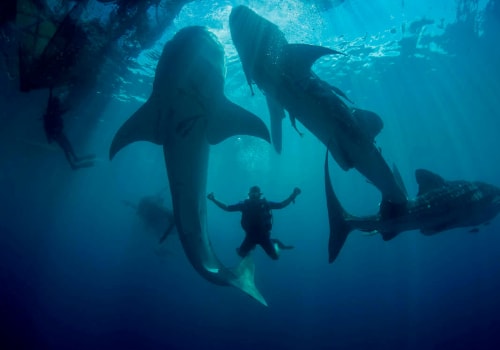
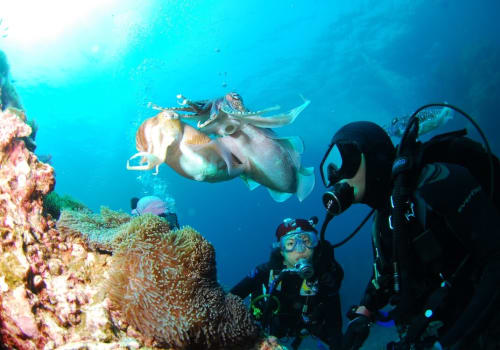
Komodo National Park is located between the islands of Sumbawa and Flores, 200 nautical miles east of Bali. Powerful currents sweep through the channels between the islands, creating nutrient-rich waters teeming with life. Divers and snorkelers regularly encounter manta rays, reef sharks, turtles, and massive schools of fish. The strong currents also shape dramatic underwater terrain, with coral-covered pinnacles, steep drop-offs and walls.
Accessibility is possibly the biggest advantage when visiting Komodo. Most cruises depart from Labuan Bajo on Flores Island, a mere 75-minute-flight from Bali. This makes it far easier to reach than Indonesia’s more remote regions. With short itineraries and easy logistics, Komodo offers a great introduction to cruising in Indonesia. Another benefit is flexibility. If you have limited time, Komodo cruise itineraries can be as short as four nights, or as long as eight nights. The cruising region is relatively compact, allowing boats to visit multiple highlights within a short space of time.
I relished an authentic experience aboard a traditional Indonesian phinisi boat, which outran the throngs of backpacker vessels with a longer itinerary that took me beyond the National Park to deserted beaches, rivers, waterfalls and mysterious volcanic lakes. Both within and outside the Park, you can marvel at the spectacle of thousands of flying foxes at sunset, enjoy scenic hikes and bird-spotting treks. This versatility makes it an especially good adventure destination for families.

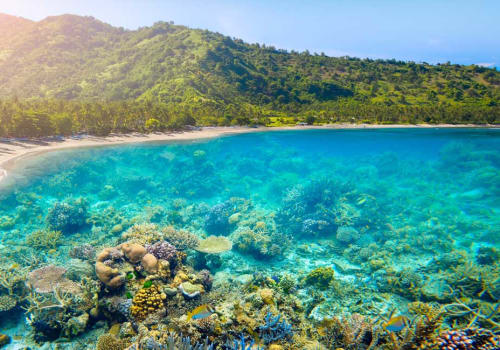
Navigating the serene bays of Raja Ampat reveals a landscape of limestone karsts teeming with life. This remote archipelago is the ultimate destination for travelers seeking world-class marine biodiversity and pristine, untouched waters.
Described as the ‘Last Paradise on Earth’, Raja Ampat straddles the Equator off the extreme northwestern tip of Indonesia’s West Papua Province. The region is an archipelago of 610 islands plus hundreds of karst islets, so undercut by waves that they look like mushrooms, topped with jungle foliage. Cruising through this seascape feels like an exploration of a lost world. The larger islands are wrapped in rainforest stretching all the way down to a coastline of beaches, coves, lagoons, inlets and caves.
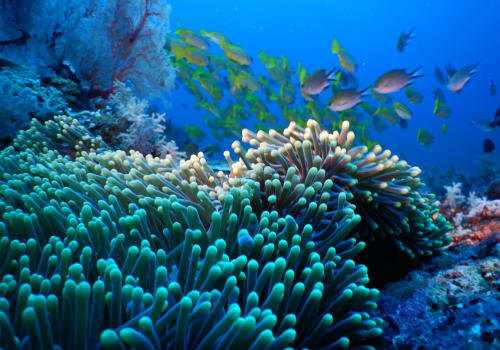
In 2024, I was a guest on a Raja Ampat adventure cruise, and each day I donned fins, mask & snorkel and explored a below-surface world reminiscent of a living kaleidoscope, flourishing with soft corals reminiscent of white asparagus, purple sprouting broccoli, oyster mushrooms and the finest globe artichokes. Navigating my way around coral tabletops through stag-horn thickets and clouds of violet fish, I soon began to spot cleverly camouflaged creatures hiding in the reef crevices with markings reminiscent of soda bubbles and leopard-print fabrics. So magnificent was this underwater ecosystem that I likened myself to a denizen of a giant aquarium, expecting to swim up against a wall of glass at any moment.
Raja Ampat is recognized as one of the world’s most noteworthy ecological niches. Marine biologists have established the region is home to 70 percent of the known coral species on the planet. Colorful coral gardens stretch across shallow bays, home to everything from tiny pygmy seahorses to large pelagic species such as manta rays and reef sharks. Many of the fish, corals and crustaceans living in these warm, clear waters are unique to the area, making it a dream destination for divers and snorkelers.
I also observed a wealth of exotic bird life here, spotting hornbills, kingfishers, parrots and cockatoos, as well as two of the five different bird-of-paradise species endemic to Raja Ampat, performing their elaborate courtship dances.
Of course, Raja Ampat’s remote location (1,222miles/1966km from Bali) means considerably more effort is required to get there. Most travelers fly to Sorong, via Jakarta, or Bali and Makassar. There are no direct international flights to the West Papua Province. From Sarong, you will be transferred by speedboat to your cruise vessel. The remoteness contributes to an unspoiled environment but also increases travel time and cost. Cruises here are typically longer, you’ll need about ten or twelve nights to explore this vast region, which also means longer sailing distances, usually undertaken at night, between the destinations.
For many travelers, Raja Ampat represents the ultimate Indonesian expedition. A dream trip that will thrill divers, snorkelers, photographers, nature lovers and conservationists alike, it is best suited to those seeking extraordinary underwater ecosystems, and a true sense of discovery.

Step back in time among the Spice Islands. Beyond their stunning azure waters and pristine beaches, these islands hold centuries of history, offering a unique voyage where maritime heritage meets natural beauty.
When I was a little girl, my mother used to make this old-fashioned milk-based dessert called junket. She would liberally sprinkle the top with ground nutmeg; a spice with an extraordinary history. She told me it came from some obscure tropical islands on the other side of the world.
Located 1470miles/2,365km from Bali, Indonesia’s fabled Banda Islands are so far off the tourism map that few people know of either their existence or their major historical importance. The world’s only source of nutmeg and mace in the Middle Ages, this cluster of 11 small volcanic islands shaped the history of the East Indies from the 16th century onwards when nutmeg was worth more than its weight in gold. Colonial powers fought long and hard for control of these islands.
Many years after watching my mum sprinkle nutmeg on her junket, I came to live in Indonesia and decided to follow the spice trail for myself. Approaching the Bandas by boat, alongside migrating sperm whales, and with dolphins riding our bow, I felt on par with the pioneering adventurers. The first island to appear on the distant horizon was Banda Run; as we got closer we could see rows of tiny, pink, yellow and blue houses cascading down to a coral reef. In the 17th century, Run was the subject of one of the most spectacular deals in history, when the English traded it with the Dutch for the Island of Manhattan. Yes, that Manhattan! Gradually the other islands came into sight, revealing a gorgeous and deserted golden-sand beach on Banda Ai. We then rounded the volcanic island of Gunung Api, ‘Fire Mountain,’ with its black lava stream, before entering the deep trench of water known as the ‘Sonnegat’ (sun’s gap) and catching our first glimpse of Banda Neira, where Fort Belgica – built by the Dutch in 1611 – peacefully observed our arrival. Beyond, I could see the nutmeg forested slopes of Banda Besar, the largest island in the chain and I fancied I could smell the aromatic spice floating on the breeze. I was well versed on the islands’ illustrious history, yet now they were a place of extraordinary beauty that time appeared to have forgotten. I’d been wanting to come here for more than half my life, finally I had arrived.
And there’s more: 460miles/740km to the north, lie another two, historically significant spice islands, named Ternate and Tidore, which I also visited. These twin volcanic islands are ancient Islamic sultanates, rising dramatically from the sea off the coast of Halmahera. Ternate and Tidore were once the world’s only source of cloves, through which their rulers became among the wealthiest and most powerful sultans in the region. Much of their wealth, however, was wasted on fighting each other. Each island is dominated by a towering volcano. Attractions here include historic forts, clove forests, sandy beaches, and immaculate villages with candy-colored houses. In Ternate, I visited the royal palace, where traditions of the old spice kingdom still endure.
Unlike Komodo or Raja Ampat, the Spice Islands are a destination less visited, more remote, and often a segment of a longer voyage that crosses the Banda Sea between different parts of Indonesia. If you enjoy history, culture, and off-the-beaten-track exploration to somewhere that few people ever visit, the Spice Islands provide one of the most magical cruising experiences. This is my all-time favorite destination in Indonesia.
Although all three of these cruise destinations showcase Indonesia’s incredible natural beauty, they appeal to different types of travelers, and choosing between them ultimately comes down to your personal travel priorities.
While it is possible to visit Raja Ampat and the Spice islands on one cruise, the logistics of adding Komodo to that same itinerary creates the challenge of seasonality combined with the vast distance. Boats that relocate seasonally between Raja Ampat, the Banda Islands and Komodo present an alternative form of expedition in April/May or November/December. These routes are specifically designed to turn the long passage into a rare journey, ideal for private charters for extended families or large groups.
While Rainforest Cruises aim to provide accurate and up-to-date information, we make no representations as to the accuracy or completeness of any information herein or found by following any link on this site. Rainforest Cruises cannot and will not accept responsibility for any omissions or inaccuracies, or for any consequences arising therefrom, including any losses, injuries, or damages resulting from the display or use of this information.