
The Mekong River flows lengthy distances between Cambodia, Vietnam and Laos and in Vietnam it splits into nine estuaries as it travels towards the East Sea. While cruise itineraries bring visitors to river highlights, inevitably other spots can’t be taken in. Here’s our curated list of overlooked stops.
At the edge of Tan Chau town find a revived ancient tradition of silk dyeing and weaving. It’s the only place in the delta where silk is dyed with a natural product. In the yard of the factory (some 13 miles from Chau Doc) is a Mac Nua tree, where we were shown a lime-green fruit the size of a bubble gum ball. Mac Nua fruit is soaked in water in large vats where it leaches a yellow dye. Woven silk is dipped into the dye and dried in a repeat cycle of more than 100 times over one month. The material is then pounded with woodblocks to polish it up into a deep shiny black color. We watched the staff at work and strolled to the fields where the vast yards of fabric are laid out under the sun to dry. Our guide said the ripples of fabric are so large they can be spotted on Google Earth. The signature silk is highly prized. French haute couture houses come to buy direct. And it was most famously worn by Angelina Jolie in Disney’s Maleficent: Mistress of Evil.

The journey of Mekong black silk begins here. Witness the timeless craft of sorting golden cocoons, a delicate tradition that anchors the heritage of the Delta’s hidden artisanal villages
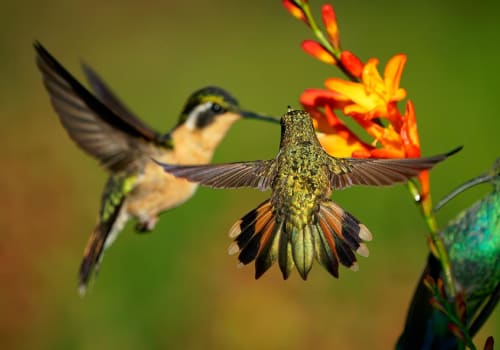
Tra Su, 15 miles from Chau Doc on the Cambodian border, is a nature reserve explored on a gentle journey via a sampan and a guide who paddles the boat with oars. Dense towering trees of spindly paperbark (Cajeput trees), some forming natural arches over the water, curved over us as we were paddled along canals carpeted in green duck weed. It was a very peaceful journey until the many birds that call Tra Su home cranked up their day. We spotted egrets, storks, the olive-green tailorbirds and caught a flash of the bronze-winged jacana whose long turquoise and emerald green necks distinguish this water bird.

A quiet resident of the Tra Su Cajuput Forest. Gliding through these flooded paperbark groves offers a rare chance to observe the Delta’s vibrant birdlife in their undisturbed, emerald sanctuary.
Northeast of Sa Dec is Tram Chim National Park. Birders flock to the area for a chance to spot the rare and vulnerable red-headed crane (Grus Antigone sharpii) which can be seen in the area from February to May. They are the world’s tallest flying bird and very distinctive with their scarlet crowns and necks, long beaks and red legs. More than 220 other species of birds live in the sanctuary, including the lesser adjutant, a large lemon-yellow necked stork, the painted stork with its enormous beak and burnt-orange crown, the Asian openbill sporting beautiful black and white wings, and the Darter with its exquisite liquorice-black feather and cream plumage. The paperbark forest park is visited by boat, and the reserve features an observation tower for excellent views.

A perspective from above: Navigating the winding waterways of Tram Chim National Park reveals a labyrinth of flooded forests, offering a serene escape into one of the Mekong’s most vital ecosystems.
The work-a-day town of Vinh Long, south of An Binh island, is often overlooked. An Binh is known among visitors for its family homestays, ecotourism, and the 19th-century Tien Chau Pagoda set in a garden of flowers. Visitors come to cycle its rural paths to explore fruit orchards. But the town has religious draws, too. The modernist St Anne’s Roman Catholic Cathedral is striking, and there’s a flamboyant Cao Dai church in colors of cream, duck egg blue and mustard yellow. Cao Dai is a 100-year-old homegrown religion fusing eastern and western philosophies with a pantheon of saints including Confucius, Christ, Victor Hugo and Sir Winston Churchill. Despite being an officially atheist country, Vietnam surprisingly hosts a wide variety of religions and beliefs. Discovering Cao Dai has been one of the highlights. Although the temple in Vinh Long isn’t as grand as the original in Tay Ninh, you can still observe the complex ceremonies with believers dressed in white, red, blue, or yellow based on their ‘religious branch’ and status and experience a heartwarming sense of unity beyond tolerance. Just outside of town is Van Thanh Mieu Temple, a rare Confucian temple in southern Vietnam.
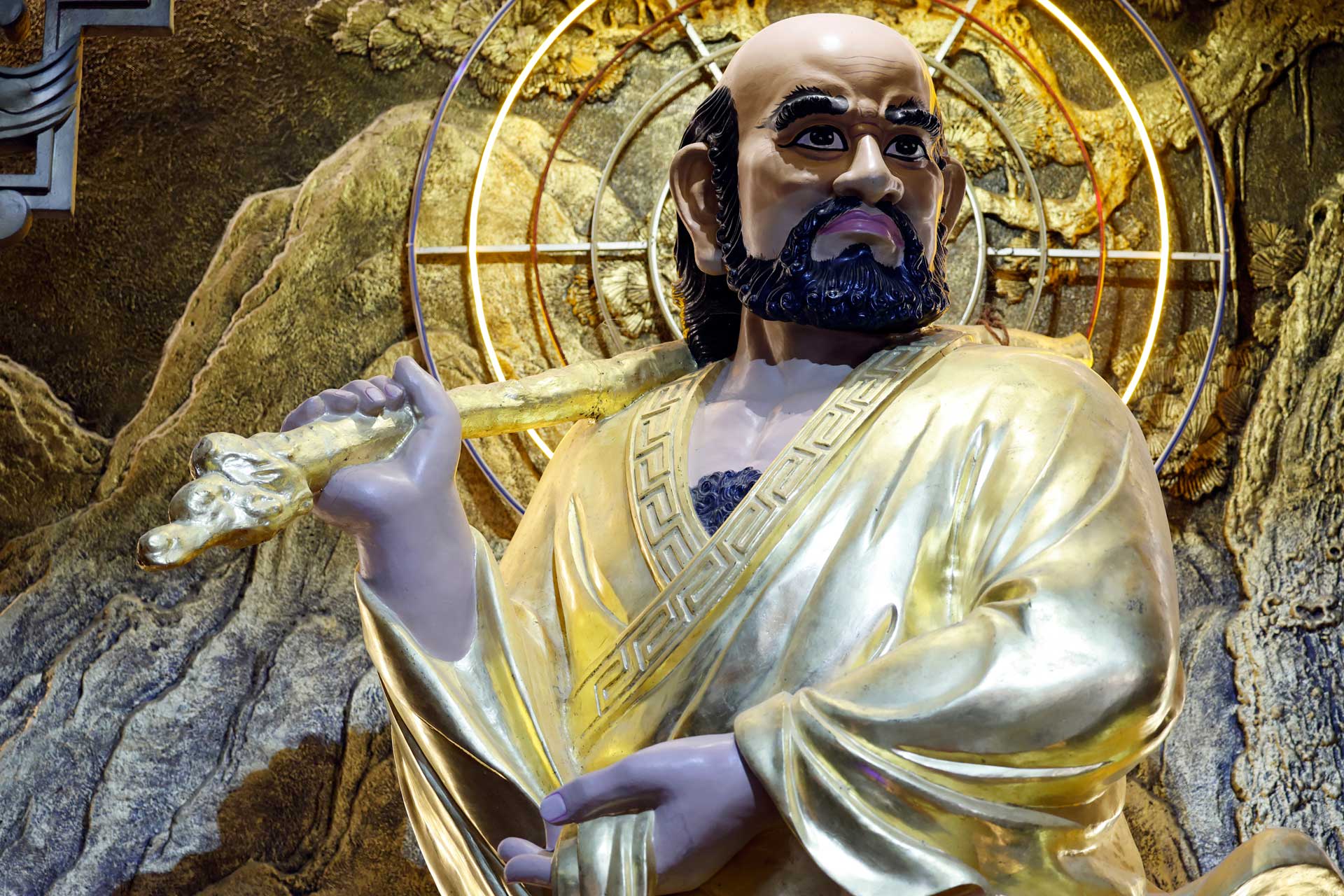
Intricate artistry meets spiritual devotion in Vinh Long. The town’s temples are filled with striking details and cultural symbols that tell the storied history of the Mekong’s diverse heritage.
Tra Vinh is quite special for its number of Khmer temples; they shape the town’s landscape with gold gates, tall columns, and Nagas guarding the entrances. Although Tra Vinh is set well away from the Cambodia border and the true heartland of Khmer identity and religion Tra Vinh, an attractive town, closer to Saigon than Cambodia, is home to a large population of Khmer people. It’s said there are some 140 Khmer temples in the town, alongside Buddhist pagodas, Chinese pagodas, mosques and churches.
Traveling through southern Vietnam, especially in the Mekong Delta, reveals how to distinguish Khmer temples from Vietnamese pagodas or quiet Taoist temples. Khmer and Vietnamese Buddhism are two different traditions: Khmer Buddhism is Theravada, while Vietnamese temples follow the Mahayana tradition. This leads to the unique style of Khmer temples, with the main temples and various buildings used by monks for living quarters, dining halls, and more. They are also much more decorated, featuring colorful murals on the walls and sculptures depicting scenes from Buddha’s life and legends. Simply walking around the temple grounds offers a lesson in the history of religion and its stories. For further town highlights, visit Ong Met Pagoda, a 16th-century gilded Chinese-style temple but with much earlier roots; at Ao Ban Om (Hang Pagoda) the draw is the hundreds of storks that call the pagoda home. The Chua Angkorajaborey is a 10th-century Khmer pagoda with a temple of deeply sloping roofs and golden finials.

Golden spires reach toward the sky in Tra Vinh. These stunning pagodas offer a window into the unique Khmer architectural influence that defines this peaceful corner of the Mekong Delta.
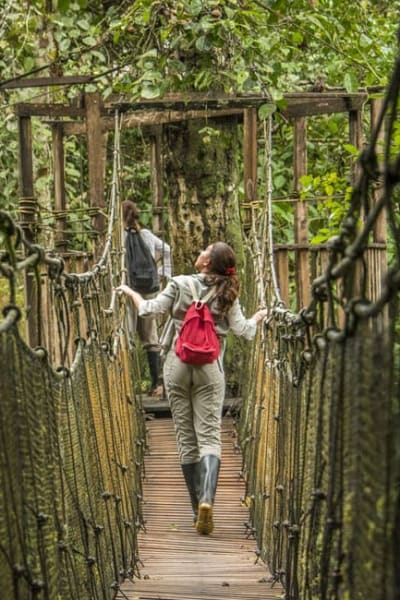
Xeo Quyt, ‘meaning small stream of mandarins’, is a byword for a hidden Viet Cong base-turned-museum submerged beneath paperbark forest. Found east of Cao Lanh, 25 Viet Cong lived in some 20 underground chambers between 1966 and 1975. I boarded a small boat that was paddled through the canals of the forest, alive with kingfisher and butterflies. My guide and I passed camouflaged chambers and small campsites. The VC would hide in these chambers of around one square meter for several hours breathing through a bamboo pole in a hole, he said. The journey by boat through water hyacinth-choked channels is incredibly atmospheric.

Step into history at Xeo Quyt. These hidden forest paths and narrow bridges once served as a strategic jungle base, now offering a peaceful trek through the Delta’s resilient natural landscape.
Soc Trang is a predominantly Khmer town famous for its boat racing festival and pagodas. The Ok Om Bok Festival is held on the 14th-15th day of the 10th lunar month (around late November or early December) where locals race longboats on the Soc Trang River in an echo of the Phnom Penh boat festival that celebrates the moment the water in the Tonlé Sap branch of the Mekong reverses its flow and backs up into the Tonlé Sap Lake during monsoon season. The Khleang Pagoda, a Khmer temple, houses a golden Shakyamuni statue. Buu Son Tu is adorned with almost 2,000 clay sculptures of dragons, lotus flowers and phoenixes. Sro Loun Pagoda is impressive and colorful and decorated with hundreds of porcelain plates and bowls and beautiful tile work. The Matoc Pagoda (also known as Maha Tup in Khmer) is a 400-year-old site of worship known for the thousands of fruit bats that roost in the gardens.

The vibrant colors of Soc Trang. Beyond the famous river races, the city’s temples captivate visitors with mythical Naga carvings and intricate designs that celebrate the region’s rich cultural fusion.
Very close to the Cambodia border and halfway between Chau Doc and Ha Tien on the Gulf of Thailand coast is a sobering memorial. The Ba Choc ossuary is dedicated to the 1,000 Vietnamese killed by the Khmer Rouge in 1978 when they crossed the border. It’s a striking and shocking sight as a glass memorial column reveals skulls stacked on top of each other that are graded by age and by gender. A small museum displays photos and details of the massacre.
Any attractions of My Tho are frequently overlooked now as cruise ships are keen to get deeper into the delta. However, floating in the Tien River near My Tho are four islands named after mythical creatures: Dragon, Unicorn, Phoenix and Tortoise. Although no longer the quiet islands they once were, they are still visited by travelers in search of their fruit orchards of longan trees, coconut, durian and pomelo. On Unicorn Island, honey is made, too. Phoenix Island is known, too, as the island of the Coconut Monk. Legend relates that a monk developed a new religion here which blended Buddhism and Christianity and that he eat nothing but coconuts during a three-year meditation stint.

Island hopping, Mekong style. Navigating the narrow canals of My Tho’s “animal islands” offers an intimate look at the fruit orchards and traditional river life that thrive in this verdant Delta landscape.
Close to My Tho is Ap Bac an indelible name and battle for those interested in war history. It was here, in 1963, that the Vietnamese communists won their first major military victory against the American-backed forces of South Vietnam, the Army of the Republic of Vietnam. It was the moment it dawned on the US command that the communists would not be defeated without US military intervention. At Ap Bac, 12 miles west of My Tho, there’s a small museum and monument.

A gateway to the past at the Ap Bac battle site. This memorial arch marks a significant turning point in regional history, standing as a quiet, roadside reminder of the events that shaped the modern Mekong Delta. source: Dragfyre, CC BY-SA 3.0 <https://creativecommons.org/licenses/by-sa/3.0>, via Wikimedia Commons
Just beyond Kampong Cham, from where many river cruise passengers disembark to go overland to Siem Reap and Angkor Wat in Cambodia, are a couple of temples. Wat Nokor, or Banteay Prey Nokor, is a Buddhist temple dating back to the 13th century. But what’s so unusual is that within its ancient, carved walls is a modern temple in bright colors depicting scenes from the Buddha’s life. Nearby are the twin holy mountains of Man Hill (Phnom Pros) and the taller Woman Hill (Phnom Srey). Legend relates that a mountain-building competition was launched to decide whether men or women should propose marriage. The women won! The hills overlook the surrounding countryside with phenomenal views.

The climb to Phnom Srey. Overlooking the legendary “Woman Hill,” these weathered statues and grand staircases invite travelers to explore the ancient folklore and quiet beauty of the Mekong’s spiritual peaks.
Although not all these stops are available on current cruise itineraries, Rainforest Cruises is able to plan and arrange all pre- or post-cruise extensions.
While Rainforest Cruises aim to provide accurate and up-to-date information, we make no representations as to the accuracy or completeness of any information herein or found by following any link on this site. Rainforest Cruises cannot and will not accept responsibility for any omissions or inaccuracies, or for any consequences arising therefrom, including any losses, injuries, or damages resulting from the display or use of this information.