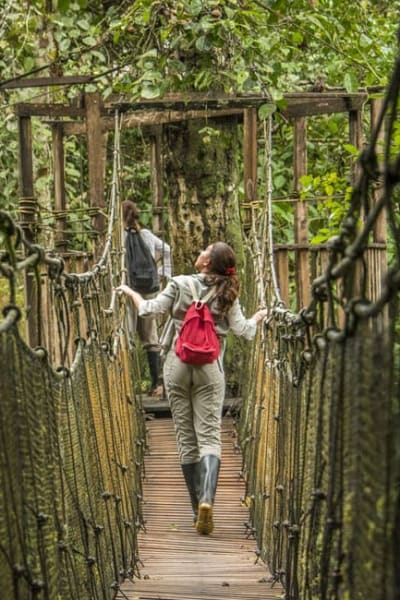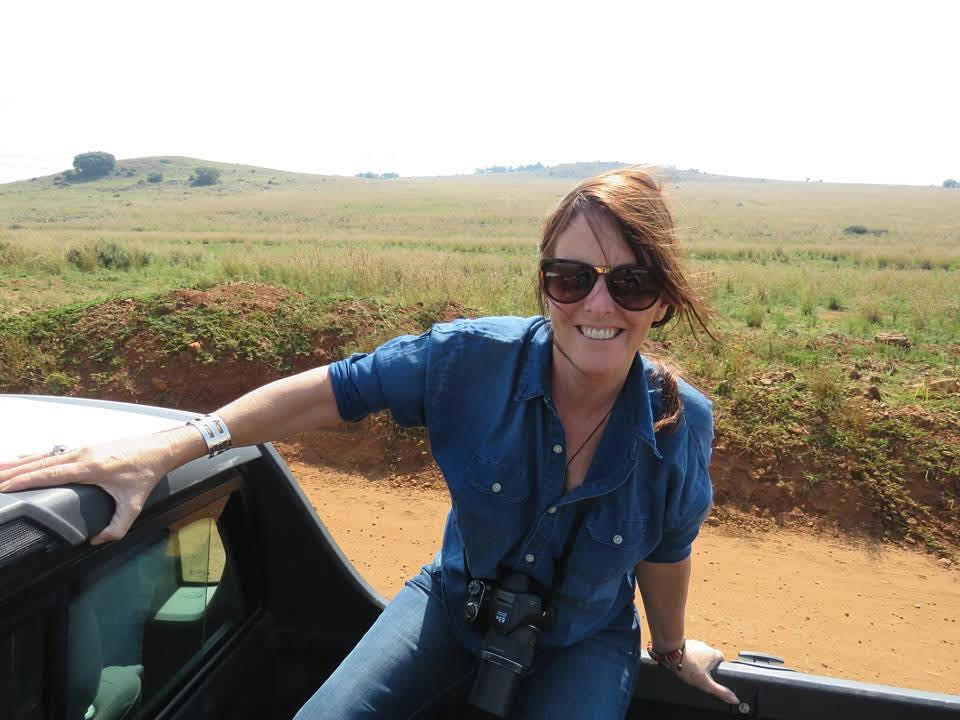

Even though I was already living in Indonesia, I had assumed that the expedition cruise routes in this country were primarily about scenery, wildlife, and diving. From the rivers of Kalimantan in Indonesian Borneo to the Komodo National Park and the adjacent island of Flores, I was expecting to see orangutans and jungles, dragons, perfect coral reefs and dramatic volcanic views. Yet somewhere between stepping onto a wooden ‘klotok’ riverboat and, later, a ‘phinisi’ sailing ship, and journeying through these regions, I realized these places aren’t just visually extraordinary, they are culturally dense in ways that are easy to miss. This is especially true when you experience them from the filtered lens of a dive cruise itinerary.
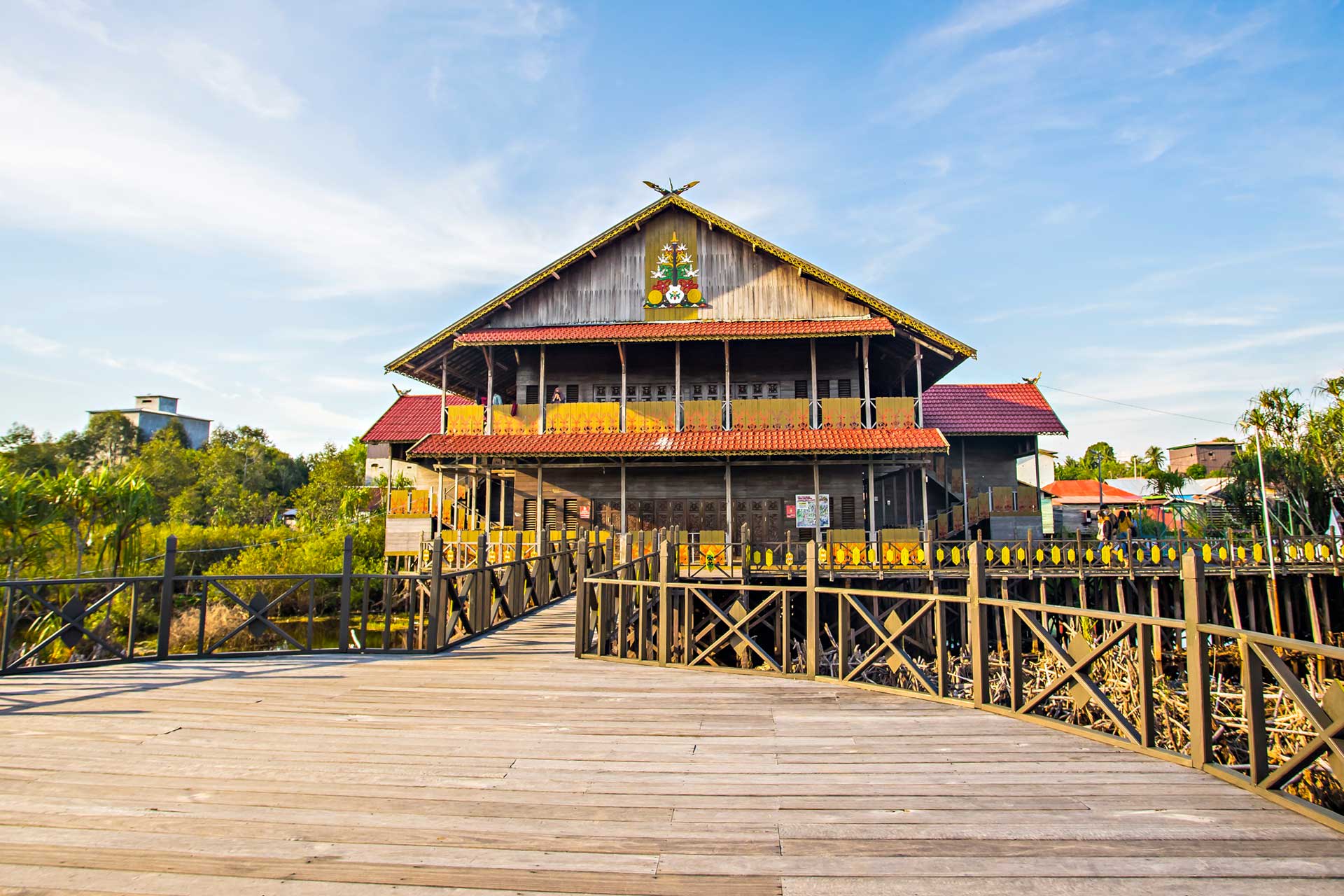
A grand, traditional Dayak longhouse rises above the landscape in Borneo, standing as a powerful symbol of community and enduring cultural heritage.
Kalimantan was my introduction. Of course, this was a riverboat adventure rather than a dive cruise, but I knew it would be about orangutans. Too many of these magnificent creatures have been orphaned, poached or had their forest homes destroyed by palm oil plantations. Thankfully, the Borneo Orangutan Survival Foundation is giving these critically endangered primates a second chance. Those that have been rescued are rehabilitated on huge river islands, which provide a safe environment to re-acclimatize with jungle life prior to being released back into the wild. To witness a buffoonery of these enormous apes, hanging out at the water’s edge, followed by a glimpse of an alpha male in the wild, was my sole reason for going on this trip, but the part I hadn’t anticipated was the cultural aspect.
The indigenous Dayak people traditionally live in longhouse dwellings along the banks of the rivers. They are known for their intricate tattoos and time-honored dances, and with their deep reverence for nature, they have long been stewards of the rainforest. They have been practicing sustainable agriculture, hunting, and fishing for generations, but like the orangutans they now face persistent threats from deforestation, mining, and land dispossession. In the face of these challenges, the Dayaks have become powerful symbols of resilience and environmental activism.
I felt privileged to visit a small village where I had a lesson in rubber tapping, bought a bottle of delicious liquid honey made by tiny stingless meliponine bees, and learned about the wealth of medicinal plants that grow in the rainforest. My host, Alue, talked about the loss of the Dayak lands to the extensive palm oil plantations within the area. “Legal battles over our ancestral lands are common because our ‘adat’ customary laws and land rights are often not formally recognized by the authorities,” explained Alue, “and these pressures contribute to the erosion of our cultural practices and ecological knowledge. Everything we do is deeply tied to the land and the river”.
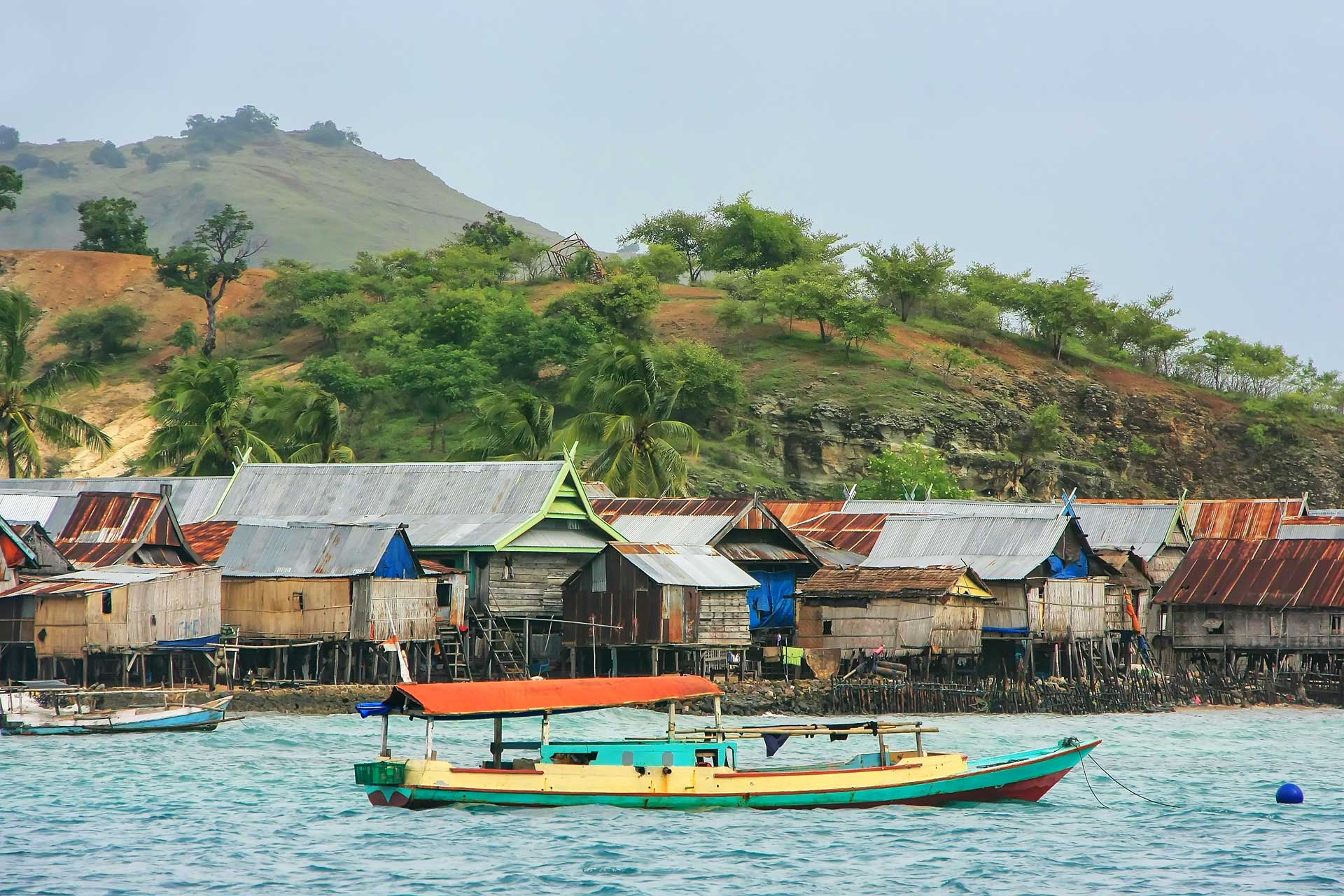
Nestled along the rugged coastline, Komodo Village showcases a resilient coastal community that has uniquely learned to thrive in harmony with the island’s famous prehistoric predators.
I was on a combination cruise—incorporating two destinations, connected by two domestic flights, and entitled ‘Orangutans and Dragons’. Komodo was next, aboard the Katharina, and by now I had a sneaking suspicion that it wouldn’t just be about dragon spotting or snorkeling on the coral reefs even though both of those activities did prove to be astonishing. A visit to the tiny village of Komodo was also an eyeopener. I’d read that the island was once a place of banishment for transgressors of the law and the residents of this Muslim village are their descendants. Here, I bought a small woodcarving of a dragon, giving the money directly to the craftsman, in the doorway of his house, rather than purchasing it from one of the stalls beside the tourist center.
Then, accompanied by a young man called Safi, I wandered into the nearby graveyard, and noticed the heavy rocks and concrete slabs, which had been placed on the burial sites. Safi explained that the dragons have earned a chilling reputation as grave robbers. Given the opportunity, these giant lizards, with their extraordinary sense of smell, will dig up freshly buried human remains in search of an easy meal. “To prevent this,” Safi said, nonchalantly, “We put big stones on the graves”. Having lived alongside the dragons all of his life, he added, “We’re not scared of them, they’re just our neighbors”.
I gleaned that the lives of these islanders are shaped by adaptation. Our conversation touched on religion, trade, fishing, local traditions, and the difficulties encountered by Safi’s community. Cruise itineraries often move quickly through Komodo, ticking off viewpoints and wildlife encounters. What they might miss are the cultural aspects of conservation versus livelihood, tourism versus tradition.

Woven with precision and deep-rooted symbolism, the intricate patterns of traditional Ngada ikat textiles reflect generations of cultural identity and artistic mastery.
On a five-day, add-on overland trip through western Flores, the cultural landscape shifted again. It was here that I began to understand how much of Indonesia’s identity is woven, literally, into textiles. Visiting the highland villages of the Ngada communities, I met Johanna, Maria, and Angelika. Their names indicated that they were Catholics, although many of these mountain dwellers also maintain their traditional animistic beliefs.
Johanna showed me the various stages of the dyeing, spinning and weaving processes. After gathering the raw materials: the locally-grown cotton, and the natural dyes derived from roots, leaves and fruits, the women spin the cotton into threads using a hand spindle. The threads are then tie-dyed to create the ikat patterns before being handwoven into specific, complex designs. I watched Maria and Angelika weaving on their back-strap looms, sitting on the ground with their legs stretched out in front; their hands moving with a rhythm that was both practiced and deeply personal. Each symbolic pattern carries meaning, “Our clan identity and our ancestral stories,” explained Maria, “and the motifs are passed down from mother to daughter”.
I bought three swathes of ikat to decorate the walls and furnishings of my house in Bali. Weaving here isn’t a craft for tourists, it’s a living system of knowledge, central to household income and social identity. I quickly understood that what I’d been seeing in the shops and markets was only the surface. The real story was in the villages themselves, where weaving is still deeply embedded in daily life.
My experiences were an insight into a greater understanding. These places are not empty landscapes. They are inhabited, shaped, and sustained by people whose lives are intertwined with their environments in ways that are both complicated and precarious. Cultural preservation takes on different meanings when you look closer, but the structure of cruise travel makes it easy to miss this. Time is limited and stops can be too brief; you see just enough to be impressed, but maybe not enough to fully understand.
Looking back, I recognized that the most meaningful moments of my journey were the ones that disrupted that pattern, the times when I lingered a little bit longer in a village, asked one more question, shared a laugh, or paid attention to something that wasn’t part of the main attraction. The rivers of Kalimantan weren’t just wildlife corridors, they were cultural lifelines. Komodo wasn’t just about dragons, it was about coexistence with them, and Flores was a cultural heartland of weaving, ritual, and community. What most travelers miss is not hidden; it’s simply quieter.
Every destination has a fascinating story to tell, and if you wish to step into these stories, consider an immersive cultural expedition aboard Silolona, El Aleph, or Katharina.
While Rainforest Cruises aim to provide accurate and up-to-date information, we make no representations as to the accuracy or completeness of any information herein or found by following any link on this site. Rainforest Cruises cannot and will not accept responsibility for any omissions or inaccuracies, or for any consequences arising therefrom, including any losses, injuries, or damages resulting from the display or use of this information.